AI SEO
What is AI SEO?
More users are now turning directly to AI platforms, asking ChatGPT, Gemini, or Perplexity a question and trusting the answer they receive. These engines pull information from across the web and attribute it to sources they consider credible. Brands not optimised for this channel are simply absent from conversations that are already happening.
AI SEO is the practice of ensuring your brand is one of those credited sources. It means building the topical authority, content structure, and trust signals that determine which brands get cited and which get overlooked.
Our AI SEO service covers an initial audit of how your brand appears across the six major generative engines, through to an ongoing strategy of content creation, authority building, and technical optimisation.
Facts About AI SEO
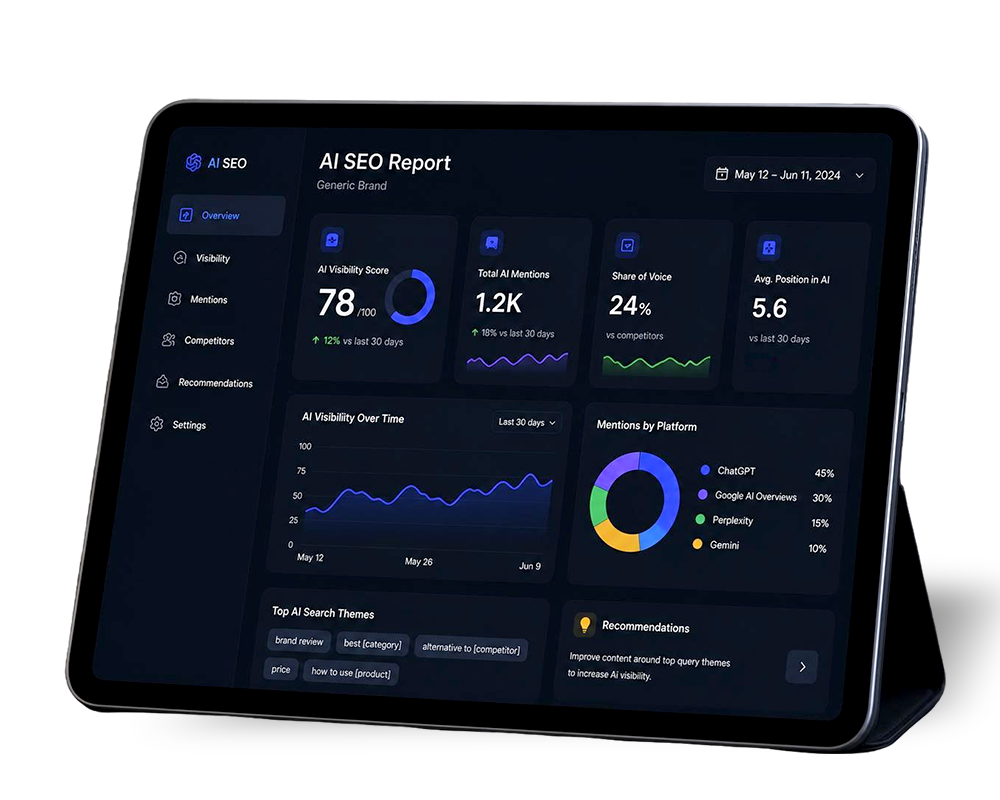
Over 58% of Google searches now end without a click, as AI-generated answers satisfy queries before users ever reach a website.
ChatGPT, Perplexity, Gemini, and Google AI Mode collectively handle billions of queries every month, reaching an audience that traditional SEO alone cannot capture
Brands cited in Google AI Overviews appear above all organic results, gaining top-of-page visibility before a single traditional link is shown.
How AI SEO Builds Visibility Where Search Is Heading Next
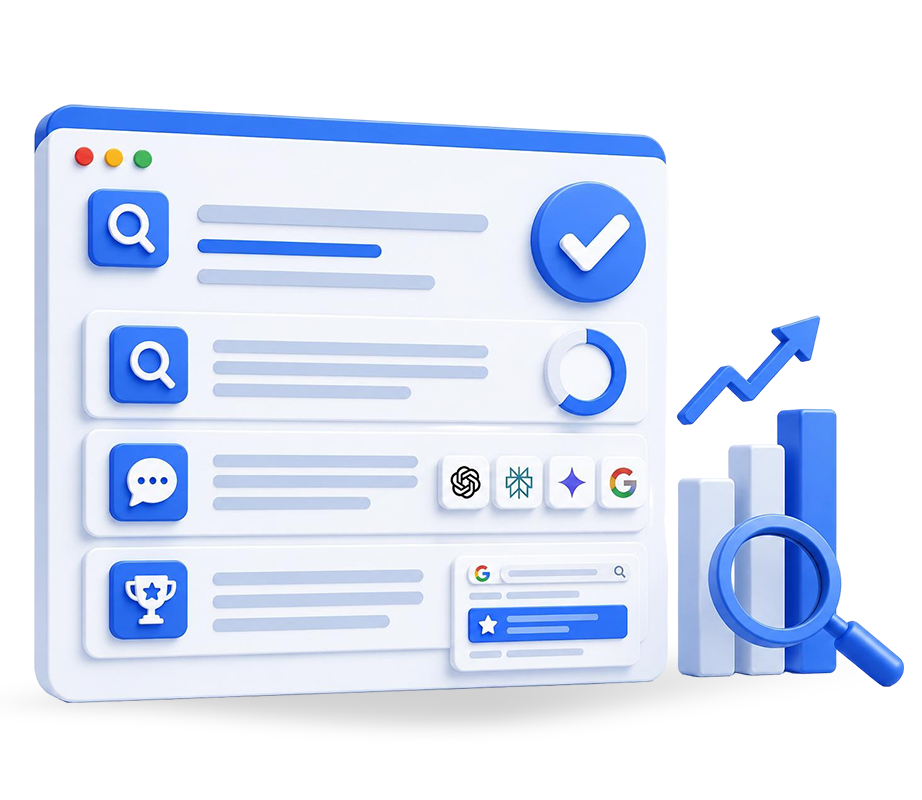
Generative engines don't rank pages, they choose sources. AI SEO ensures your content is structured and authoritative enough to be selected as one of them, giving your brand visibility that keyword targeting alone cannot achieve.
AI engines favour brands with demonstrated expertise, consistent publishing, and credible third-party references. By building these E-E-A-T signals into your content and digital presence, your brand becomes a source that generative models consistently recommend.
AI SEO and traditional SEO are complementary. The depth, structure, and authority signals that earn AI citations are the same qualities that improve organic rankings, creating a compounding effect that benefits both channels simultaneously.

How AI SEO Gets Your Brand Cited Across Generative Engines
01
ChatGPT
ChatGPT browses the web in real time through ChatGPT Search, retrieving and citing the pages that best answer a user’s query. Your content competes for citation just as it does in traditional search.
Key Optimisation Signals
- Write direct, conversational answers to common questions in your industry
- Structure content with clear H2/H3 headers so the model can extract precise answers
- Build topical authority by covering subjects comprehensively across multiple pages
- Ensure your site is crawlable, fast-loading, and accessible
02
AI Mode
Google AI Mode handles complex, multi-step queries by synthesising information from across the web into a single conversational response, with source links shown prominently.
Key Optimisation Signals
- Build deep topical authority across your core subject areas
- Use structured data (FAQ, HowTo, Article schema) to clarify your content type
- Target long-tail, multi-intent queries your competitors underserve
- Demonstrate E-E-A-T through author bios, credentials, and first-hand experience
03
AI Overview
AI Overviews appear above organic results and pull from multiple sources, giving cited brands top-of-page visibility before users reach any traditional link.
Key Optimisation Signals
- Lead each page with a concise, factually accurate answer to the target query
- Use FAQ sections to address questions your audience is actively searching
- Build domain authority through quality backlinks and consistent publishing
- Avoid thin or duplicate content, as AI Overviews favour original, well-cited pages
04
Gemini
Gemini powers both Google AI Mode and the Gemini assistant app. It draws from Google-indexed content and applies quality signals that align closely with Google’s Search Quality Rater framework.
Key Optimisation Signals
- Align with Google’s E-E-A-T guidelines across all key pages
- Ensure pages are indexed, mobile-friendly, and meet Core Web Vitals
- Use clear, factual language backed by credible references
- Optimise your Google Business Profile for local and brand-driven queries
05
Claude
Claude references material that is well-written, comprehensive, and demonstrates genuine expertise. It favours nuanced, in-depth content over surface-level summaries.
Key Optimisation Signals
- Write thorough, well-researched content that addresses topics in full
- Show clear authorship and professional credentials on key pages
- Use an authoritative tone rather than keyword-heavy copy
- Cite credible primary sources and data throughout
06
Perplexity
Perplexity is a real-time answer engine that actively crawls the web and cites live sources for every query, giving fresh and technically accessible content a strong advantage.
Key Optimisation Signals
- Publish and update content regularly, as Perplexity prioritises recency
- Maintain clean HTML and fast page speed for reliable crawler access
- Write factually dense, well-sourced content that works as a reference
- Use descriptive, keyword-aligned title tags and meta descriptions
Frequently Asked Questions (FAQs)
Traditional SEO earns your website a ranked position in a list of search results, and users see your link and choose whether to click. AI SEO earns your brand a citation inside the AI-generated answer itself, and users see your brand name as the source before they even consider clicking. Both share the same technical and content foundations, but AI SEO adds an additional layer focused on how generative models select and reference sources. Ideally, the two strategies run together, as they reinforce each other significantly.
For real-time AI engines like ChatGPT Search and Perplexity, which actively crawl the web, citation improvements can appear within weeks of publishing well-optimised content. For AI models with periodic training update cycles, improvements typically become measurable within 3–6 months. Google AI Overview results, which follow Google's indexing timelines, often respond more quickly, particularly once structured data and E-E-A-T signals are in place.
Yes, and your existing Google rankings give you a head start. Good organic rankings correlate strongly with AI Overview citation (over 99% of cited pages already rank in the top 10), but ranking well does not automatically guarantee you will be cited in ChatGPT, Perplexity, or Gemini responses. AI SEO closes that gap, ensuring the authority you have already built translates into visibility across every channel your customers are using.
Yes. We conduct regular prompt-testing sessions across all six platforms using queries directly relevant to your business and industry. We track how often your brand is cited, what context it appears in, and how you compare to competitors. This data is included in your monthly AI SEO report alongside recommendations for improving citation frequency.
Yes, and often more effectively than for large brands. AI engines place high value on niche topical authority, which means a specialist Singapore SME that thoroughly covers a specific subject can outrank large generalist websites for citations within that topic. This is a genuine opportunity for local businesses to gain visibility ahead of bigger competitors who have not yet invested in AI SEO.
Any industry where buyers research before making a decision benefits significantly, including financial services, professional and legal services, healthcare, B2B technology, education, e-commerce, and real estate. In Singapore specifically, we see strong results for fintech, recruitment, F&B, and legal services brands that invest in building topical authority within their niche.