Nano Banana 2 vs. GPT Image 2: A Close Look at the Future of AI Imaging
- May 11, 2026
- Updates
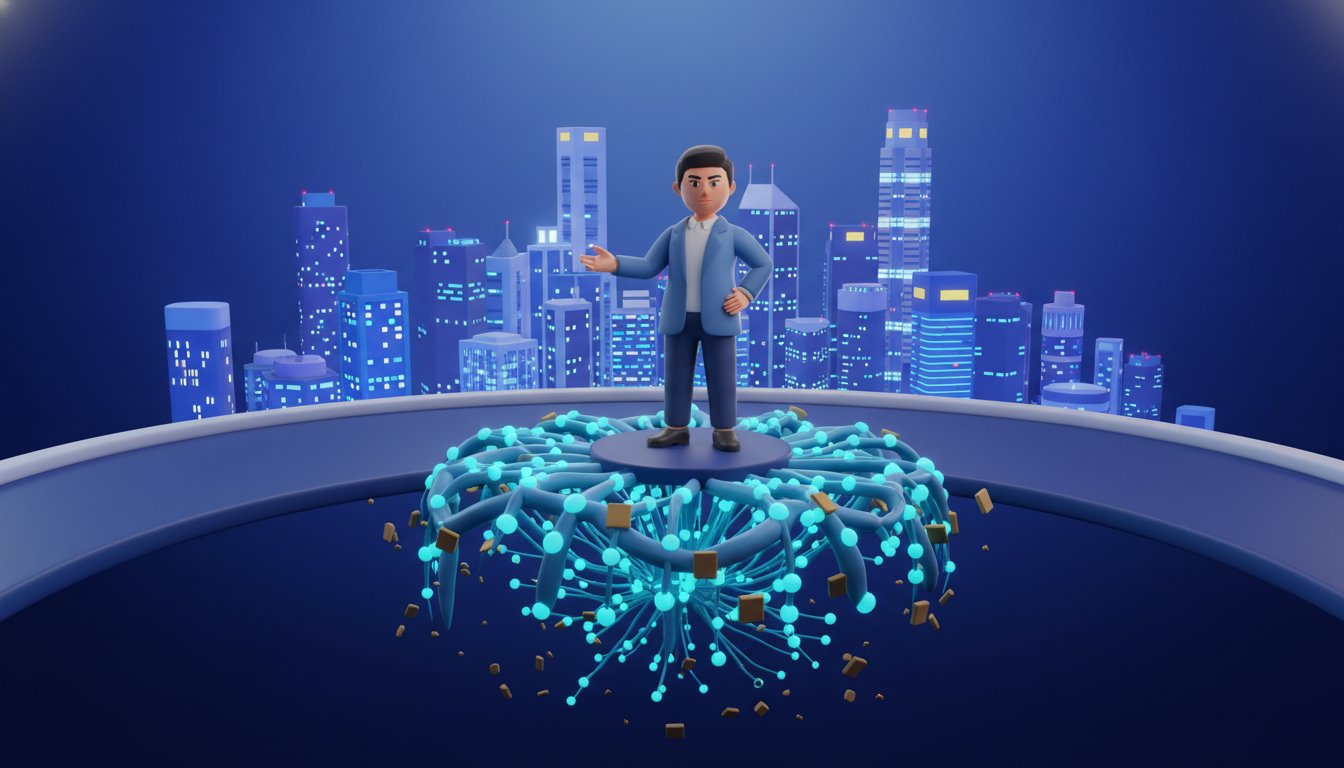
The field of AI image generation is a fast-moving stream, with new breakthroughs appearing almost daily. Two of the most talked-about contenders in this space are Nano Banana 2 and GPT Image 2. Both models represent significant leaps in capability, promising to redefine how we create and interact with visual content. But which one is right for you? This article dives deep into a head-to-head comparison to help you understand their unique features, strengths, and ideal applications.
As these technologies evolve, businesses must also consider how their AI-generated content is discovered. Newnormz provides the expertise needed to navigate this shift, offering AI-driven SEO and Generative Engine Optimisation to help brands maintain visibility.
What is Nano Banana 2?
Nano Banana 2 is Google’s latest state-of-the-art image model, built on the foundation of Gemini 3.1 Flash Image. It’s designed to bring the advanced reasoning and world knowledge of its predecessors (Nano Banana and Nano Banana Pro) but at a significantly faster speed. This speed makes it ideal for rapid editing and iterative workflows, particularly within Google’s ecosystem of products like the Gemini app, Google Search, and Google Ads.
Key features of Nano Banana 2 include:
- Advanced World Knowledge: It can draw upon Google’s vast real-world knowledge base, including real-time information from web search, to accurately render specific and niche subjects.
- Speed and Efficiency: It offers near-instant generation and powerful editing, allowing users to totally transform the vibe of an image in seconds.
- Subject Consistency: It excels at maintaining the likeness of up to five different characters across generations, making it a powerful tool for storyboarding and creating continuous narratives.
- Precise Text Rendering: It can generate clear and accurate text in multiple languages and scripts for mockups, greeting cards, and localized content.
- Powerful Editing: Nano Banana 2 accepts up to 14 reference images on its edit endpoint, allowing for complex multi-image composition and precise visual adjustments.
What is GPT Image 2?
GPT Image 2 is OpenAI’s next-generation native image generation model, integrated directly into ChatGPT and available via API. It moves beyond being a simple tool to act as a "creative sidekick," powered by enhanced reasoning and real-world intelligence. OpenAI positions it as a quality-first model, focusing on superior instruction following, photorealism, and text rendering.
Key features of GPT Image 2 include:
- Real-World Intelligence: It possesses an updated knowledge cutoff of December 2025, enabling more contextually relevant and accurate outputs.
- Superior Text Rendering: It claims near-perfect text rendering, correctly generating multi-word labels, signs, and consistent font styling across English and multiple non-Latin scripts (e.g., CJK languages, Hindi).
- Enhanced Instruction Following: GPT Image 2 better understands multi-part and complex prompts, leading to more faithful representations of a user’s vision.
- Photorealism and UI Generation: It provides a significant jump in realistic human details (like hands and faces), texture rendering, and the ability to generate plausible software interfaces.
- Multilingual Understanding: It understands localized prompts and can render text in various languages.
Key Differences Between Nano Banana 2 and GPT Image 2
While both models are formidable, their core philosophies and pricing structures reflect distinct differences that serve different user needs.
| Feature | Nano Banana 2 | GPT Image 2 |
|---|---|---|
| Foundation | Google Gemini 3.1 Flash Image | OpenAI GPT-Image-2 Architecture |
| Headline Strength | Photographic Quality, Lighting, and Speed | Text Accuracy, Structure, and Compositions |
| Consistency | Character and Object Consistency over multiple calls (up to 5 people) | Style Consistency over a series of images |
| Editing | High reference count (up to 14 input images) for complex comps | Reasoning-driven editing with high instruction fidelity |
| Grounding | Optional Web Search Grounding for current information | Internal reasoning/checks to create multiple images from one prompt |
| Resolution | Fixed Resolution Tiers: 0.5K, 1K (default), 2K, 4K | Variable Resolution with 4K support and dimension alignment rules |
| Pricing Model | Fixed Per-Image pricing based on resolution. Surcharges for Search Grounding/High Thinking. | Token-based metering with variable cost based on reasoning time and quality tiers. |
| Watermarking | Invisible SynthID + Visible Watermark | None (depends on the hosting platform/interface) |
Performance Analysis
In initial user tests and early blog reviews, several performance patterns have emerged:
- Nano Banana 2: Often wins on cinematic lighting, photorealism, and specific artistic styles like anime. It is very fast and excels at spatial composition and maintaining character details over multiple generations. However, it can make errors in reasoning, such as placing sign text that incorrectly identifies a location.
- GPT Image 2: Leads in categories like text rendering accuracy, image editing, and classical art. It is praised for its realism, complex multi-element compositions, and its ability to handle dense lettering and calligraphy with near-perfect accuracy. It is generally the model with more accurate structure and instruction following.
Pros and Cons of Nano Banana 2 and GPT Image 2
Understanding the trade-offs is essential for selecting the right tool for a given task.
| Model | Pros | Cons |
|---|---|---|
| Nano Banana 2 | • Blazing Speed: Near-instant generation and edits.• Strong Photorealism: Excellent lighting and textures.• Consistency: Handles multi-character narratives well.• Grounding: Can use real-time web information.• Complex Compositions: Accepts 14+ reference images. | • Reasoning Errors: Can make silly mistakes in text placement/logic.• Watermarking: Mandatory SynthID on every output.• Fixed Resolutions: Less flexible dimensional control. |
| GPT Image 2 | • Best-in-Class Text: Near-perfect, multilingual text rendering.• Top-Tier Instruction Following: Faithful complex prompts.• Flexible Resolution: Up to 4K with custom dimensions.• UI Generation: Produces realistic software mockups.• Quality Tiers: Offers control over generation depth vs. cost. | • Cost Complexity: Token-based billing can be unpredictable.• Speed: Reasoning-driven model can be slower than a "Flash" tier.• No Native Watermarking: (though this can be a pro for some users) |
Applications and Use Cases
Both models are highly capable, but their unique strengths make them better suited for different applications.
Ideal Use Cases for Nano Banana 2:
- Photography and Cinematic Art: When high-end photorealism and cinematic lighting are paramount.
- Storyboarding and Narrative Building: For maintaining character continuity across many scenes.
- Rapid Prototyping and Iteration: When speed is critical, and a "fast and loose" creative process is preferred.
- E-Commerce Lifestyle Images: Creating product context with strong lighting and atmospheric effects.
- Localized Global Content: Using web grounding to accurately depict specific regional details.
Ideal Use Cases for Nano Banana 2:
- Graphic Design and Marketing: When images require dense, accurate, and multi-word text.
- UI/UX Prototyping: Generating plausible application and website interfaces from text concepts.
- complex Multi-Element Compositions: Creating complex scenes with precise instruction following.
- Conceptual Art and Data Visualizations: Where accurate structural control is more important than pure photorealism.
- Multi-Language Publishing: Localizing visuals with high fidelity text rendering.
The Future of AI Image Generation
Nano Banana 2 and GPT Image 2 represent a crucial turning point. We are moving beyond the era where simply generating a clear image is the goal. The new frontiers are:
- Workflow Integration: Models that fit seamlessly into production pipelines, with high consistency and robust editing endpoints.
- Reasoning and Quality Control: Models that don’t just render pixels but "think" about the content, reducing obvious logical or structural errors.
- Text Rendering Proficiency: The "final frontier" for many design tasks, text must be as reliable as a vector font tool.
Conclusion
The choice between Nano Banana 2 and GPT Image 2 is not a matter of one being definitively "better." Instead, it is a choice of a specialized tool for a specific job.
- If you value speed, cinematic photorealism, and consistency for character-driven narratives, Nano Banana 2 is a formidable choice.
- If your priority is absolute text accuracy, complex multi-part prompts, and structurally sound compositions (including UI elements), GPT Image 2 is currently the leader.
The future of visual content creation is not about a single perfect model but a versatile toolkit. Creative professionals should experiment with both models to understand their unique capabilities and find the best fit for their needs.
Ultimately, the most successful brands will be those that combine cutting-edge AI imagery with a comprehensive digital strategy. To ensure your business gets the visibility it deserves, check out Tools N Tactics | Local SEO & Digital Marketing Solutions for expert insights on climbing the search rankings.






More from our blog
See all posts